Today’s factory-built homes can qualify for many of the same financing options as site-built homes, including conventional and government-backed mortgages. Understanding these basics can make factory-built housing a more affordable, attainable path to homeownership without sacrificing stability.
This guide covers common loan options, how down payment assistance can cut upfront costs, and key factors to consider before applying, so financing won’t block your progress.
What Impacts How a Factory-Built Home Is Financed
Financing a factory-built home isn’t one-size-fits-all. Several factors determine what loan options are available, starting with how the home is legally classified.
How the Home Is Titled
One of the most important distinctions in factory-built home financing is whether the home is titled as real property or personal property (often called chattel).
- Real property homes are typically those permanently affixed to land. They may qualify for traditional mortgage financing with longer terms and competitive interest rates.
- Personal property homes are usually financed with chattel loans, which often have shorter terms and higher rates.
Land Ownership
Whether the buyer owns the land, is building on family land, or plans to place the home on leased land also affects financing eligibility. Mortgage loans generally require land ownership, while chattel loans are more common in land-lease communities.
Foundation Requirements
Permanent foundations play a critical role in expanding access to financing. Homes installed on approved, permanent foundations are more likely to qualify as real property and meet lender requirements for mortgage financing. Read our foundations guide to learn more about the options for factory-built homes.
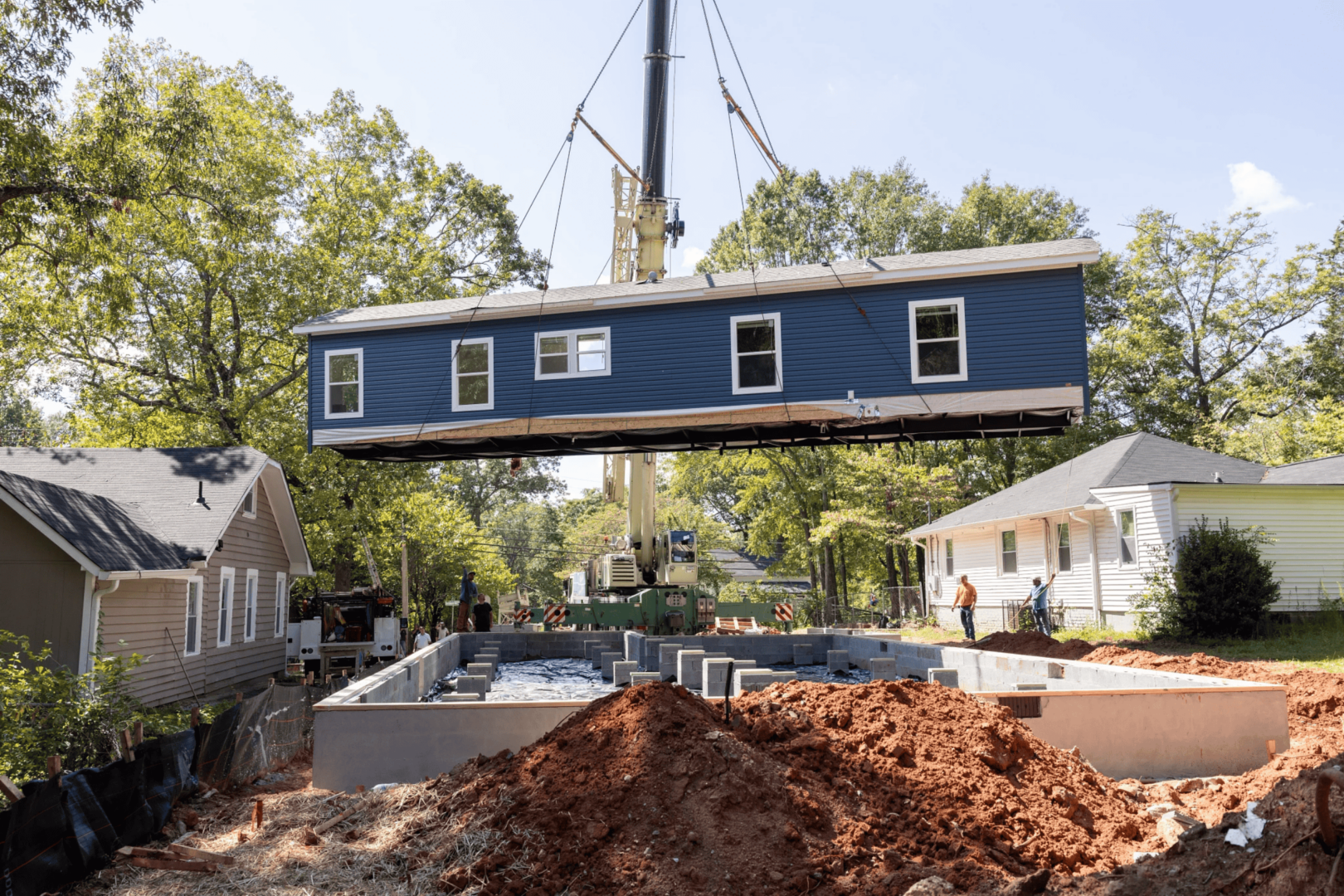
Modern factory-built homes are designed to meet stricter construction, safety, and energy standards. These advancements, combined with updated lending programs, have helped open the door to more equitable financing options that better align with those available for site-built homes.
Mortgage Loan Options for Factory-Built Homes
When a factory-built home is titled as real property and placed on a permanent foundation, buyers may qualify for several mortgage loan options that closely resemble those available for site-built homes. These loans typically offer longer terms, predictable payments, and stronger consumer protections.
- Conventional Mortgage Loans: Conventional loans are often available for factory-built homes titled as real property, allowing buyers to access 30-year fixed-rate mortgages with interest rates similar to those for site-built homes, making payments more manageable and affordable in the long term.
- FHA Loans: Loans backed by the Federal Housing Administration (FHA) are popular for factory-built homebuyers. FHA loans usually offer lower down payments and more flexible credit guidelines, making them especially appealing to first-time buyers. FHA financing is available for qualifying factory-built homes that meet placement, foundation, and title requirements.
- VA & USDA Loans (Where Eligible): Eligible buyers may qualify for zero-down mortgages through VA or USDA programs, reducing upfront costs and increasing access to homeownership. USDA loans are limited to rural areas but include many factory-built housing locations. VA loans are available to eligible veterans, active service members, and surviving spouses.
- Specialized Factory-Built Home Programs: Fannie Mae and Freddie Mac offer specialized mortgage programs for modern, energy-efficient factory-built homes. They align factory-built housing with site-built financing, offering competitive rates, longer terms, and clearer appraisals. These programs are vital for buyers wanting traditional financing, particularly with experienced lenders.
Personal Property (Chattel) Loans: What to Know
Not all factory-built homes are financed with traditional mortgages. When a home is titled as personal property, often because it’s placed on leased land or not permanently affixed to a foundation, buyers typically use a personal property loan, commonly known as a chattel loan.
Chattel loans are designed to finance the home itself rather than the land it sits on. These loans are frequently used in land-lease communities, on rented lots, or in situations where converting the home to real property isn’t immediately possible.
How Chattel Loans Differ
Compared to mortgage loans, chattel loans usually have:
- Shorter loan terms, often 15–20 years
- Higher interest rates than traditional mortgages
- Faster approval and closing timelines
Pros & Cons to Consider
Chattel loans can offer speed and accessibility, but they also come with tradeoffs. Shorter terms and higher interest rates can impact long-term affordability, and these loans typically don’t offer the same consumer protections as mortgage financing. Understanding these differences up front helps buyers make informed decisions.
Can Buyers Transition to Real Property Later?
In some cases, homeowners may be able to convert a factory-built home from personal property to real property after installation. This usually involves placing the home on a permanent foundation, securing land ownership, and updating the title. If successful, refinancing into a traditional mortgage may become an option, potentially improving loan terms and long-term equity building.
Personal property loans aren’t inherently “bad,” but they are different. The key is knowing when they’re appropriate, how they affect long-term costs, and whether a future transition to mortgage financing is possible.
Down Payment Assistance: A Game Changer for Buyers
For many buyers, the down payment is the biggest obstacle to homeownership. That’s where down payment assistance (DPA) can make a meaningful difference. DPA programs are designed to reduce upfront costs and help qualified buyers move forward sooner, and many of these programs can be used to purchase a factory-built home.
What Is DPA?
Down payment assistance typically comes from state housing finance agencies, local governments, nonprofits, or community development organizations. These programs help cover part or all of a buyer’s required down payment and, in some cases, closing costs.
Contrary to common belief, DPA isn’t just for extremely low-income households. Many programs serve moderate-income buyers, first-time homebuyers, and households purchasing affordable homes in targeted communities.
Common Types of DPA Programs
DPA can take several forms, including:
- Grants, which do not need to be repaid
- Forgivable loans, which are forgiven after the buyer remains in the home for a set period
- Deferred-payment loans, which don’t require repayment until the home is sold or refinanced
The structure varies by program, but all are designed to lower the barrier to entry.
Using DPA to Buy a Factory-Built Home
Many DPA programs are compatible with factory-built home purchases, especially when the home is titled as real property and financed with a mortgage loan. Some programs also allow DPA to be paired with specialized factory-built home financing options.
The key is alignment: buyers must work with lenders who are approved by the DPA program and familiar with factory-built housing. Starting the DPA search early helps ensure eligibility, reduces delays, and avoids last-minute surprises.
When combined with affordable factory-built housing, down payment assistance can significantly expand access to sustainable homeownership – turning what feels out of reach into a realistic next step.
How to Find Down Payment Assistance Programs Near You
Down payment assistance programs are widely available, but they aren’t always easy to find. DPA offerings vary by state, city, county, lender, and loan type, which means eligibility and availability can look very different depending on where a buyer plans to live and how the home will be financed.
Use our Down Payment Seeker Tool™
The Down Payment Seeker™ is a free, interactive tool that helps prospective buyers find local, state, and national DPA programs that specifically support factory-built homes. Start by entering basic information about the property and your homebuying situation. From there, the tool provides a list of programs you may qualify for. View the tool in our Resource Library here.
Work With the Right Lender
Not all lenders participate in DPA programs, and not all DPA-approved lenders have experience with factory-built homes. Buyers should look for lenders who understand both the financing requirements for factory-built housing and the specific rules tied to local DPA programs. This alignment is critical to avoiding delays or disqualification later in the process. Next Step’s Lender Partners are a good place to start your lender research. Make sure to compare multiple lenders to ensure you get the best loan terms for your situation.
Start the Search Early
Because DPA funds can be limited or competitive, starting early gives buyers more flexibility. Exploring options before choosing a home – or even before getting pre-approved – can help buyers:
- Understand how much assistance may be available
- Identify compatible loan programs
- Make informed decisions about land, placement, and budget
With the right tools and guidance, finding DPA doesn’t have to be overwhelming. Early research and the right lender partnership can unlock resources that significantly reduce upfront costs and make factory-built homeownership more attainable.
What Lenders Look For (and How to Prepare)
Applying for a home loan can feel intimidating, but understanding what lenders actually evaluate can make the process far more manageable. Whether financing a factory-built home with a mortgage or a personal property loan, lenders generally focus on a few core factors to assess readiness and affordability.
Credit Basics (Perfection Not Required):
Credit scores matter, but they aren’t the whole story. Many loan programs allow for imperfect or limited credit, especially for first-time buyers. Payment history, recent credit behavior, and overall trends often matter more than a single number.
Debt-to-Income Ratio Explained
Lenders also look at your debt-to-income (DTI) ratio, which compares monthly debt payments to monthly income. This helps determine whether a borrower can comfortably manage a mortgage or loan payment alongside other obligations. Keeping new debt low and paying down balances where possible can improve eligibility.
Documentation to Gather Early
Preparing documents in advance can speed up the process and reduce stress. Buyers are typically asked for:
- Recent pay stubs or proof of income
- Tax returns or W-2s
- Bank statements
- Identification and employment history
Having these materials ready makes it easier for lenders to assess options and provide accurate guidance.
Why Pre-Approval Matters
Getting pre-approved before shopping for a home is especially important for factory-built housing. Pre-approval clarifies budget, confirms loan eligibility, and signals to sellers and retailers that a buyer is serious and prepared. It also helps identify potential challenges early—before they become roadblocks.
Preparation doesn’t require perfection. With a basic understanding of lender expectations and a little advance planning, buyers can approach financing with confidence.
Common Financing Mistakes to Avoid
Many of the challenges buyers face when financing a factory-built home aren’t due to a lack of eligibility but to misunderstandings about how the process works. Avoiding a few common mistakes can save time, reduce stress, and open up better financing options.
- Assuming Factory-Built Homes Can’t Be Financed Like Site-Built Homes: One of the most persistent myths is that factory-built homes only qualify for limited or high-cost loans. In reality, many factory-built homes, especially those titled as real property, can access traditional mortgage financing with competitive terms.
- Not Asking About Real Property Options: Some buyers default to personal property financing without exploring whether their home could qualify as real property. Asking early about land ownership, foundation requirements, and title conversion can significantly expand financing choices.
- Waiting Too Long to Explore Down Payment Assistance: DPA should be part of the conversation from the start. Waiting until the loan application is underway can limit options or cause delays, especially when programs have funding caps or specific lender requirements.
- Working With Lenders Unfamiliar With Factory-Built Housing: Not all lenders understand the nuances of factory-built home financing. Working with a lender who lacks experience can result in misinformation, unnecessary denials, or missed opportunities for better loan terms.
The good news? These mistakes are easy to avoid with early planning, the right lender, and access to reliable information. Understanding the process puts buyers back in control.
Final Takeaway: Financing for Factory-Built Homes Is More Accessible Than You Think
Financing a factory-built home doesn’t have to be a barrier to homeownership. As construction standards, placement options, and lending programs have evolved, so have the financing opportunities available to buyers. Today, many factory-built homes qualify for competitive mortgage loans, DPA, and specialized programs designed to support long-term affordability.
The key is understanding how factors like title, land ownership, and foundation type affect eligibility, and starting the process early with lenders and resources that understand factory-built housing. With the right information and support, factory-built homeownership can be a practical, sustainable path forward.
Take the Next Step Toward Homeownership
If you’re considering a factory-built home, don’t let financing uncertainty slow you down. Start by exploring available loan options, checking DPA eligibility, and connecting with housing advisors experienced in factory-built housing.