The US faces a housing shortage of 4 to 7 million homes — and a quieter story behind the headline: traditional builders have largely exited the starter-home market. Since the early 1980s, homes 1,400 square feet or smaller have dropped from 40% of new construction to just 7%. The factory-built sector is one of the few segments still building affordable, entry-level homes at scale, often without subsidy. But outdated state laws — restrictive zoning, fragmented titling, weak resident protections — continue to limit where manufactured homes can be sited, how they can be financed, and how secure homeownership can be once it’s achieved.
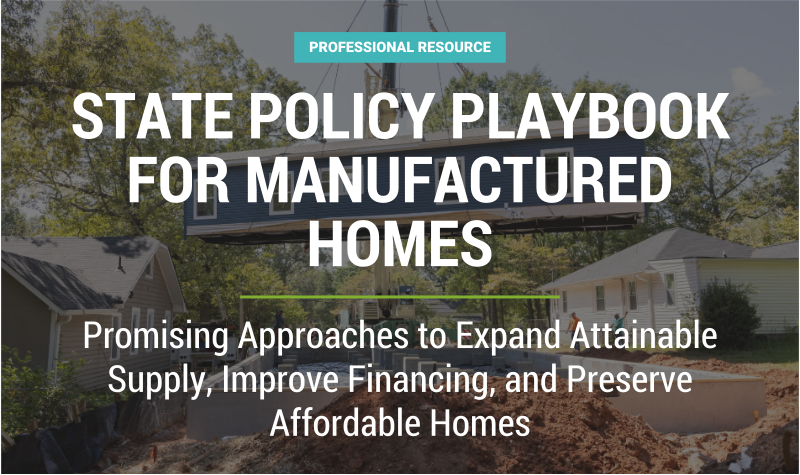
The State Policy Playbook for Manufactured Homes: Promising Approaches to Expand Attainable Supply, Improve Financing, and Preserve Affordable Homes is a 54-page resource for state policymakers, housing advocates, and the CDFI and nonprofit partners working alongside them. It lays out five concrete goals that states can act on to maximize manufactured housing’s potential. The playbook was co-authored by Next Step Network’s VP of Strategic Partnerships, Grant Beck, alongside Rachel Siegel (The Pew Charitable Trusts), and Laura Abernathy and David Sanchez (ROC USA), and developed with input from the I’m HOME Network Steering Committee.
How to Use It
If you’re working on state-level housing legislation, building a coalition with policymakers, or making the case to a state housing finance agency, this is the playbook to bring to the conversation. Pair it with the Factory-Built Housing Toolkit: Essential Resources for Developers and the Factory-Built Housing Terms for Developers Glossary for the operational and terminology context behind the policy recommendations.
What You’ll Find
The playbook is organized around five state-policy goals:
- Goal 1 – Increase access to attainable housing using manufactured homes: Zoning and land-use reform; lower-cost financing tools to develop new manufactured homes
- Goal 2 – Replace substandard homes and vacant lots with new, efficient units: Replacement program design, grants and forgivable financing, and partnerships with local nonprofits for outreach and counseling
- Goal 3 – Update policies to improve mortgage access: Streamline real-estate titling, remove onerous conversion requirements, expand access to mortgage products
- Goal 4 – Preserve affordability in manufactured home communities: Strengthen lease protections, finance infrastructure in MHCs, opportunity-to-purchase laws, grants for community acquisition
- Goal 5 – Record manufactured homes like other housing types: Standardize ownership records, improve public data on manufactured home communities
Plus five appendices that work as quick references on their own:
- Appendix A: Modern Manufactured Homes and the HUD Code
- Appendix B: Twelve States That Have Passed Manufactured Housing Zoning Reform
- Appendix C: Key Differences Between Financing Options for Manufactured Homes
- Appendix D: Manufactured Home Community Stabilization and Preservation Act
- Glossary of manufactured housing policy terms