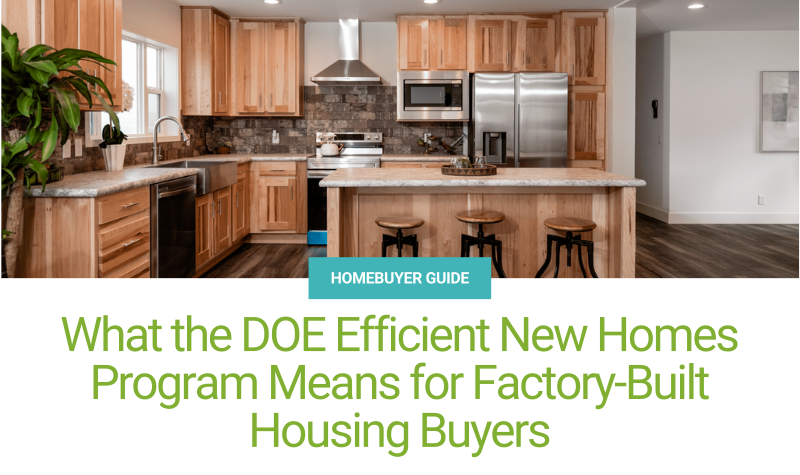
Energy costs are rising. Severe weather is more frequent. And for many families, the real cost of homeownership — the mortgage plus utilities, maintenance, and repairs — is far higher than the purchase price alone. That’s why the U.S. Department of Energy created its Efficient New Homes program: to ensure that new homes are built to perform better, cost less to operate, and hold up over time.
At Next Step, every home we help deliver is built to this standard when available. Here’s what that means for you.
What is the DOE Efficient New Homes Program?
The DOE Efficient New Homes program (formerly known as Zero Energy Ready Homes) is a voluntary federal certification that raises the bar for new home construction. To earn the label, a home must meet rigorous standards across:
- Building Envelope: Walls, floors, and ceilings sealed to minimize energy loss
- Insulation & Air Sealing: Installed to exact specifications, not approximations
- High-Performance Windows: Double-pane or better, reducing heat loss year-round
- Efficient HVAC, Appliances & Lighting: ENERGY STAR® rated throughout
- Indoor Air Quality & Ventilation Systems: For a healthier home environment
- Solar-Ready Construction: So you can add panels later and cut your bill even further
Every certified home is reviewed by a third-party Home Energy Rating System (HERS) rater who tests, not just inspects, the finished home.

Why Factory-Built Homes Are Uniquely Well-Suited for This Standard
Factory-built homes aren’t just eligible for this certification – they’re purpose-built for it. Because construction happens in a controlled indoor environment, manufacturers can achieve things that are genuinely difficult to replicate on a job site:
- No weather delays that compromise insulation or framing
- No warped lumber from sitting in the rain
- Every seal tested, every insulation batt placed to specification
- Consistent quality across every unit
The result is a home that performs better than most site-built homes, often at a price more families can afford.

What This Means for Your Monthly Budget
The numbers speak clearly. Next Step Homes that are certified to the DOE Efficient New Homes standard use 30-50% less energy than a standard new home — translating to an average of $500 in annual utility savings for homeowners. That’s money that stays in your pocket, every year, for as long as you own the home.
Those savings come from:
- Lower heating and cooling bills year-round
- High-efficiency HVAC that reduces energy draw without sacrificing comfort
- ENERGY STAR® appliances that cut electricity costs on every load of laundry or dishes
- LED lighting that uses up to 75% less energy than standard bulbs
- Tight air sealing that keeps conditioned air inside and not leaking through the walls
For first-time buyers and households on a budget, these monthly savings aren’t a nice-to-have — they’re the difference between homeownership being sustainable and stressful.
Beyond the Bill: Comfort, Health & Durability
Energy efficiency is the headline, but the daily lived experience matters just as much. In a DOE Efficient New Homes certified home, you’ll notice:
- Even temperatures room to room, all year — no cold corners, no hot spots
- Better indoor air quality from proper ventilation systems
- Fewer drafts from high-performance windows that hold in heat
- Reduced outside noise for a quieter, more restful home
- Durable, quality materials that mean fewer repairs over time
Financing Advantages Worth Knowing About
The financial benefits don’t stop at the utility bill. DOE-certified homes may qualify for specialized mortgage products from Freddie Mac and Fannie Mae. Choosing the right mortgage and lender shouldn’t be taken lightly. This decision can affect what you qualify for, your interest rate, and how much home you can afford. A HUD-certified housing advisor can walk you through how this applies to your situation. Find one in your area at HUD.gov/findacounselor.
Recommended Reading
How to Know a Home Is Certified: What to Look For
When you’re shopping for a home, here are the right questions to ask and what the answers should tell you:
Ask: Is this home independently verified?
Certified homes are reviewed by a third-party HERS rater: an independent energy professional who confirms the home meets program standards. This is consumer protection built into the process. Someone outside the building company is confirming that the home performs as promised.
Ask: Was this home tested, not just inspected?
Performance testing — including blower door tests for air leakage and duct leakage testing — confirms the home actually performs as designed. There’s a meaningful difference between a builder telling you a home is efficient and having it proven with measured results.
Look For: The Certification Label
A certified home carries a visible label from the DOE program. That label, backed by independent third-party verification, is your assurance that the home meets nationally recognized energy performance standards. It can also matter to lenders, appraisers, and future buyers when it comes time to sell.
100% of Next Step Homes Are Built to This Standard
Next Step’s mission is to make sustainable homeownership accessible to everyone — and that means not treating energy efficiency as a premium upgrade. Every home in our network is built to the DOE Efficient New Homes standard. Not some of them. All of them.
When you’re exploring a Next Step Home, you’re not being asked to trade quality for affordability. You’re getting both, plus a lower monthly cost of living from the day you move in.
Ready to Take the Next Step?
Next Step offers free homebuyer education and counseling, tools to compare your total cost of ownership, and a network of partners who specialize in factory-built homes. Explore your options at nextstepus.org/for-homebuyers or use our TotalHome+ Calculator™ to see how energy efficiency affects your monthly costs and long-term savings.
Or contact us directly: info@nextstepus.org | (502) 694-1976