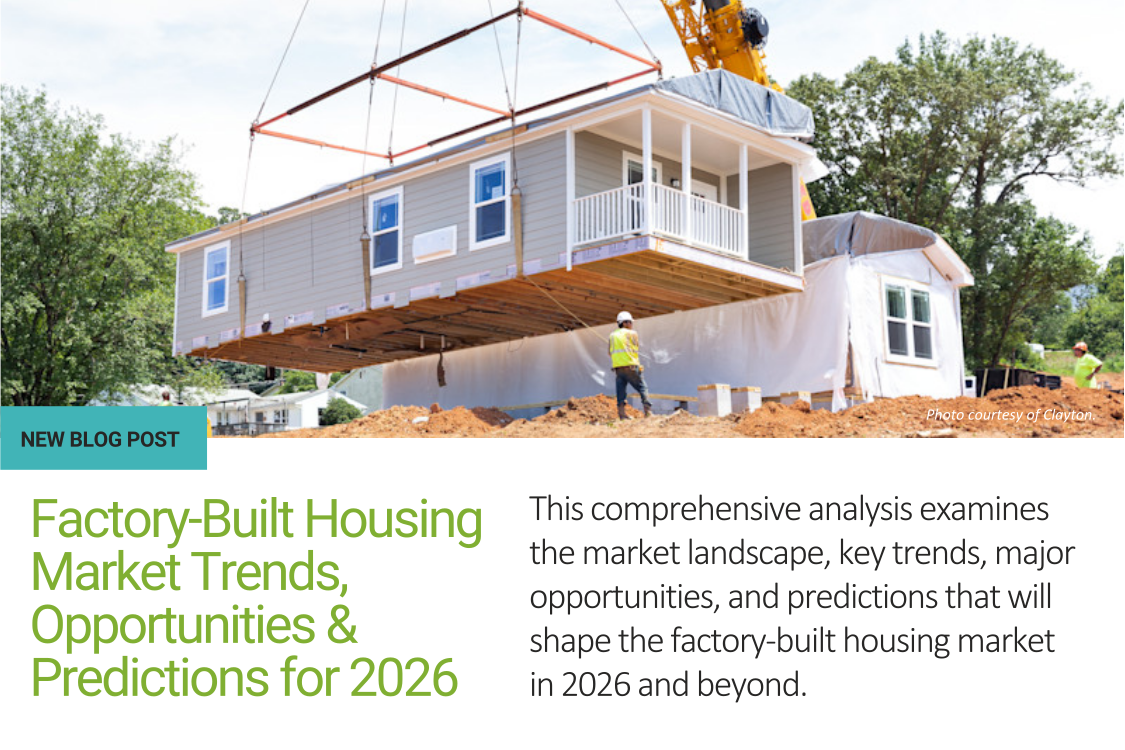
The U.S. housing market enters 2026 at a critical turning point. After years of rising construction costs, tightening credit, and persistent underbuilding, communities nationwide are facing a severe shortage of attainable homes. Factory-built housing – encompassing modular, HUD Code manufactured homes, and emerging hybrid models like ADUs and CrossMod® homes – has evolved from niche to necessary. They’re increasingly recognized as one of the most scalable, cost-stable, and energy-efficient solutions available.
In 2025, the factory-built housing sector gained momentum despite uncertainty over interest rates and lingering supply chain challenges. Developers, lenders, and policymakers began to converge on a shared understanding: modern factory-built construction isn’t just an affordable alternative; it’s a pathway to increasing supply, improving energy performance, accelerating development timelines, and expanding access to homeownership. As we approach 2026, several trends are poised to significantly reshape the industry’s trajectory.
This comprehensive analysis examines the market landscape, key trends, major opportunities, and predictions that will shape the factory-built housing market in 2026 and beyond.
State of the Factory-Built Housing Market
The past year set the stage for accelerated growth. Production volumes rose modestly after two volatile years, stabilizing as material costs returned to pre-pandemic levels. Demand for starter homes surged again as Millennials and Gen Z households entered the market, pushing policymakers to revisit local zoning barriers that restrict the development of smaller, more affordable homes.
Three major forces defined the 2025 environment:
Supply Chain Recovery & Increased Production Efficiency
Some signs suggest that material-cost and lead-time pressures may be moderating in parts of the construction supply chain, which could improve predictability for manufacturers of factory-built homes. This allowed for more predictable production schedules and tighter cost controls – two of the industry’s core advantages compared with site-built construction.
Policy Tailwinds & Zoning Reform
Dozens of state and local governments advanced zoning changes to allow modular and HUD Code homes in areas previously restricted to site-built housing. States like Colorado, California, Minnesota, Washington, and Maryland saw significant action to legalize more housing types and reduce permitting barriers.
Rising Consumer Demand for Energy Efficiency
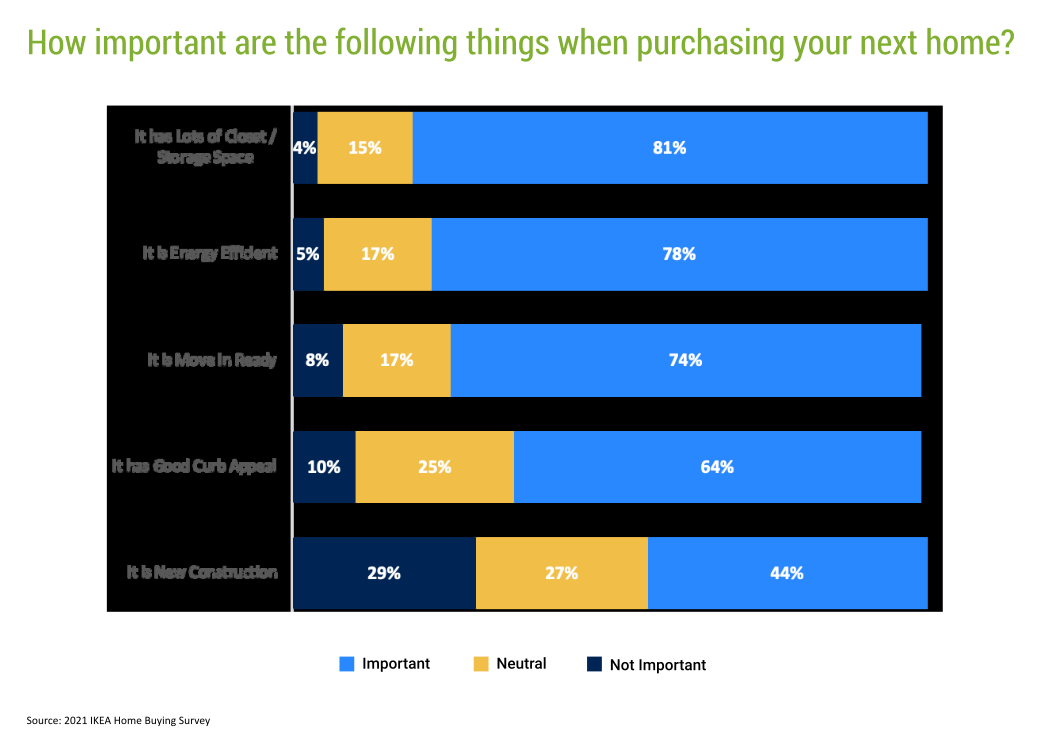
The combination of utility cost inflation and climate concerns pushed more homebuyers toward energy-efficient homes. Zero Energy Ready Homes (ZERH), solar-ready, and all-electric factory-built models gained popularity, especially among mission-driven developers and first-time buyers seeking long-term affordability. These foundational shifts created momentum that is now building into 2026.
Key Trends Shaping Factory-Built Housing in 2026
High-Performance, Energy-Efficient Homes Go Mainstream
Energy efficiency is no longer a feature that homebuyers simply want – it’s a central selling point and necessity. Factory-built homes are increasingly designed to exceed code requirements, and manufacturers have embraced advanced building envelopes, ERV/HRV ventilation systems, heat pump technologies, and solar-ready wiring packages.
Zero Energy Ready Homes (ZERH) and ENERGY STAR-certified models continue gaining market share as more developers recognize the long-term benefits:
- Lower utility bills for homeowners
- Improved indoor air quality
- Higher resilience during extreme weather
- Increased lender and appraiser recognition
With federal and state incentives supporting electrification and energy upgrades, this trend is expected to accelerate further in 2026.
Zoning Reform Becomes a Major Catalyst for Growth
Zoning reform is now one of the biggest drivers of factory-built housing adoption. Municipalities are under intense pressure to increase housing supply, and many are turning to modular and CrossMod® homes as a strategy to fill vacant lots, replace aging housing stock, and create small-lot infill developments.
Key zoning trends heading into 2026 include:
- Legalization of factory-built homes on standard residential lots
- Rezoning to allow duplexes, triplexes, and cottage clusters
- Support for Accessory Dwelling Units (ADUs)
- Streamlined permitting for factory-built homes
- Partnerships between cities and mission-driven developers
This newly receptive policy environment is expected to unlock thousands of infill opportunities, especially in older neighborhoods with underutilized lots.
Financing Innovation & Expanded Mortgage Access
While lending challenges have historically slowed factory-built housing adoption, the landscape is improving. Updates to Fannie Mae’s MH Advantage® and Freddie Mac’s CHOICEHome® programs continue to support more affordable mortgage pathways for CrossMod homes. Enhanced appraisal guidance and broader acceptance of factory-built sales comparables help stabilize valuations and reduce financing friction.
Additional expansions in 2026 are expected from:
- FHA Title II financing for HUD Code homes titled as real property
- USDA rural housing programs
- Energy-efficient mortgage products for high-performance models
As more lenders become comfortable with modern factory-built housing, financing barriers will continue to fall.
Developers Shift Toward Predictability, Speed, & Scalability
In 2026, more developers, both nonprofit and for-profit, are turning to factory-built construction to mitigate project risk. Labor shortages and unpredictable site-built timelines have made traditional construction less attractive, particularly for infill and scattered-site work.
Factory-built homes offer:
- Accelerated construction timelines
- Controlled factory environments
- Reduced weather-related delays
- Predictable material and labor costs
- The ability to scale production quickly
These advantages position factory-built housing as a strategic solution for communities seeking timely housing delivery.
Consumer Perception Reaches a New Milestone
The stigma around factory-built housing continues to diminish as more consumers see modern designs in mixed-income neighborhoods and subdivisions. Younger buyers, particularly Millennials and Gen Z, are more open to alternative building methods and value sustainability, price transparency, and design flexibility.
Social media has also played a major role. TikTok, YouTube, and Instagram have helped normalize modular, tiny, and pre-fabricated homes by showcasing real-life home tours, affordability breakdowns, and sustainability benefits.
2026 is expected to be the first year when factory-built homes become an aspirational option for a broad consumer audience.
Market Opportunities to Watch in 2026
Infill Development in High-Cost Urban & Suburban Markets
Cities across the country are turning to factory-built homes as an effective tool to activate vacant land, convert tax-delinquent properties into productive housing, and add density without disrupting neighborhood character.
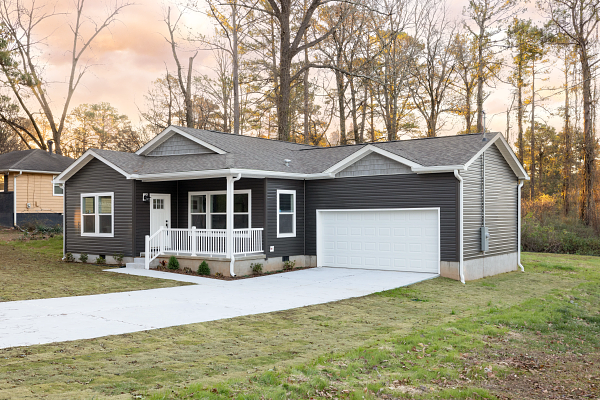
Factory-built homes are ideal for infill because they minimize the time heavy equipment and crews are on-site. Developers can complete more homes per year, and local governments can achieve faster revitalization outcomes.
Rural Housing Revitalization
Rural communities face a severe and often overlooked shortage of high-quality housing. Many towns rely on aging housing stock that is expensive to maintain and fails to meet modern energy standards.
USDA-backed financing and rural housing grants create major opportunities for factory-built developers in 2026. Modular and HUD Code homes can be deployed quickly in remote areas, meeting workforce housing needs and supporting rural economic growth.
Disaster Recovery & Resilience Markets
Climate-related disasters continue to impact millions of Americans each year, creating long-term displacement and housing insecurity. Factory-built homes provide a resilient, fast-deployment alternative during recovery and rebuilding.
Opportunities include:
- Replacement of destroyed homes with energy-efficient models
- Resilient subdivision development in disaster-prone areas
- Partnerships with nonprofits and public agencies
With federal funding increasingly focused on climate resilience, factory-built homes are poised to become a standard tool in disaster recovery.
Affordable Homeownership Pathways
Factory-built housing plays an essential role in expanding access to homeownership for low- and moderate-income families. Paired with down payment assistance (DPA), this sector can significantly reduce barriers for first-time buyers, including families of color who have been historically excluded from wealth-building opportunities.
In 2026, look for:
- Expanded DPA programs targeting factory-built homebuyers
- Increased nonprofit and CDFI involvement
- Public-private partnerships to promote wealth-building
Workforce & Missing-Middle Housing
Employers and local governments are increasingly recognizing that housing is a key economic development issue. Factory-built homes help meet the needs of workers in various industries, including healthcare, education, hospitality, manufacturing, and logistics.
Opportunities include:
- Employer-assisted housing initiatives
- Public land leasing for workforce housing
- Mixed-income subdivisions with modular or CrossMod® models
This sector is expected to experience significant growth in 2026.
Challenges That May Impact Growth
While factory-built housing is positioned for strong expansion in 2026, the industry still faces several structural and market-driven challenges that could influence the pace of growth. Understanding these obstacles is essential for developers, policymakers, lenders, and advocates working to scale factory-built solutions. These challenges don’t negate the significant momentum behind the sector, but they do highlight where targeted interventions, workforce investment, and regulatory reform will be needed to keep progress on track.
- Appraisal Inconsistencies: While progress is being made, appraisals for factory-built homes – especially in transitional neighborhoods – remain inconsistent.
- Limited Installer & Set-Crew Workforce: Manufacturers and developers nationwide report bottlenecks in skilled installation crews, which are slowing project timelines.
- Insurance Volatility: Some regions experience higher insurance premiums for all forms of housing, including factory-built homes. This may constrain affordability in high-risk coastal and wildfire-prone areas.
- Persistent Community Resistance (NIMBY): Although modern designs challenge stereotypes, some homeowners and municipalities still resist the introduction of factory-built homes due to outdated perceptions.
- Supply Chain Sensitivity: Even minor disruptions in key materials (e.g., insulation, transformers, HVAC components) can impact production.
Despite these challenges, strong momentum and demand continue to push the industry forward.
Predictions for 2026 and Beyond
Looking ahead, 2026 is expected to be a breakout year for factory-built housing. With supportive policy shifts, improving financing pathways, and rising consumer demand converging all at once, the sector is poised for measurable gains in production, adoption, and perception. Based on current data, industry signals, and emerging innovations, several clear predictions stand out for how factory-built housing will evolve in the coming year – and how it will shape the broader housing market in the years that follow.
- Factory-Built Home Production Increases 10-15%: Stabilized supply chains and new plant investments are expected to drive increased output.
- Hybrid Modular + HUD Code Models Gain Significant Market Share: CrossMod and comparable hybrid homes are expected to expand as more consumers seek high-quality designs at moderate price points.
- State-Level Zoning Reform Becomes a Major Catalyst: Expect groundbreaking legislation in progressive states like California, Oregon, Washington, Minnesota, Maryland, Colorado, and New York.
- High-Performance Homes Become a Market Standard: Zero Energy Ready and all-electric homes will dominate new product development.
- Institutional Investors Enter the Market: More impact investors and mission-driven funds will incorporate modular and manufactured homes into their portfolios.
- Consumer Acceptance Reaches Record Levels: 2026 will be a tipping point: factory-built homes will increasingly be viewed as a mainstream, desirable path to homeownership.
Conclusion
2026 is shaping up to be a pivotal year for factory-built housing. With policy momentum, financing innovation, energy efficiency expectations, and consumer demand all converging, the industry is set for substantial growth. Developers and community partners who embrace modular, HUD Code, and hybrid approaches will be best positioned to deliver high-quality, affordable homes at scale.
Factory-built housing is no longer a fringe solution – it’s an essential component of the national housing strategy for affordability, resilience, and equity. The year ahead will bring continued innovation, stronger partnerships, and widespread recognition that the future of housing is already being built inside America’s factories.